
The Concept Emotional Intelligence
What is emotional intelligence? Emotional intelligence is the ability to identify, use, understand, and manage ones emotions in positive ways to relieve stress, communicate effectively, empathize with others, overcome challenges, and defuse conflict. It is about recognizing our own emotional state and the emotional states of others. Emotional intelligence is also about engaging with others in ways that draw people to you. Emotional intelligence impacts many different aspects of your daily life, such as the way you behave and the way you interact with others.
In summary, it is about:
Recognizing One’s Own Emotions And Those Of Others So As To Respond To Situations In An Appropriate Way.
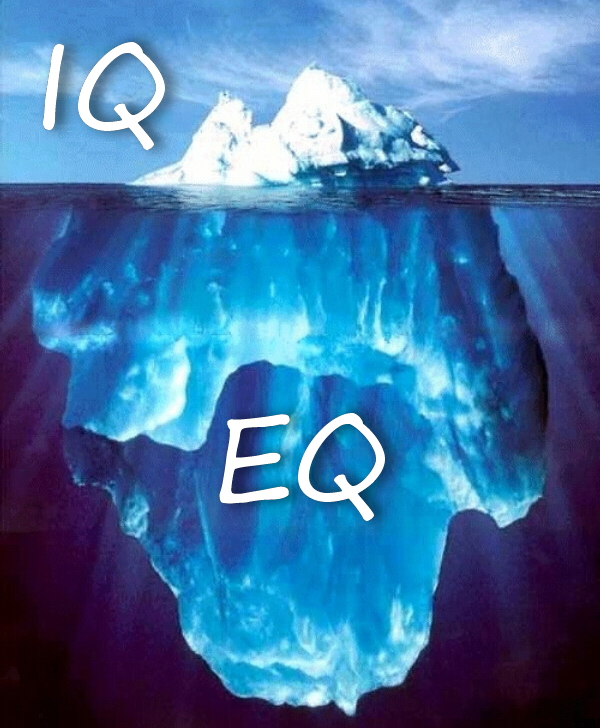
Emotional Intelligence (EQ) measures an individual‘s ability to work and socialize well with others whilst academic intelligence (IQ) measures a person‘s intellectual ability (book smart). Book abilities are important towards the success of an individual but focus from childhood to adulthood has always been on IQ, hence why EQ is rarely featured in the school curriculum.
Literature on people with high EQ states that these people:
- Stand up for principles and convictions irrespective of the negative results that might occur
- Are optimistic
- When they get knocked down, they bounce back
- Maintain a healthy balance between work and family life by pushing away or refusing opportunities that could affect this balance
- Create opportunities for spiritual activities
- Foster close relationships with people that matter in their lives
In a case study done in the 60s by a psychologist at Stanford University, he gave 4 year old children a marshmallow each and promised that if the children didn’t eat the marshmallow until he came back in 15 minutes, he would reward them with another marshmallow. Those kids that resisted the temptation to eat the marshmallow, grew up to become emotionally, socially and academically more competent. The children who gave in to temptation were more likely to be easily frustrated, stubborn and lonely.
Select A or B in the following scenarios but keep these answers to yourself:
You arrive late at work because of traffic on the freeway
A. This government needs to do something about the road infrastructure
B. I need to get up earlier so as not to be late at work
You have put on weight and your friends comment about this
A. Can‘t they see that they have also put on weight
B. I need to get back to gym or taking walks so as to manage my weight
If you selected B, then you EQ is higher than if you selected A because you are less likely to allow situations to get you down but rather take situations as a temporary setback or obstacles that you will overcome. This is a general test.
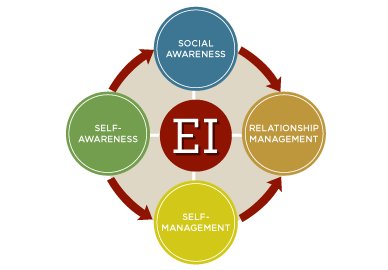
Emotional intelligence consists of four core abilities:
- Self-awareness: This refers to the ability to recognise own emotions and how they affect your thoughts and behaviour, knowing your strengths and weaknesses, and have self-confidence. When self-aware, you welcome criticism and feedback. You then recognise patterns in your own reactions and choices.
- Self-management: The ability to control impulsive feelings and behaviours, manage
your emotions in healthy ways, take initiative, follow through on commitments and adapt to changing circumstances. - Social awareness: The ability to understand the emotions, needs, and concerns of other people, pick up on emotional cues, being socially comfortable and recognize
the power dynamics in a group or organization. - Relationship management: The ability to develop and maintain good relationships, communicates clearly, inspire and influence others, work well in a team, and manage conflict.
So why is EQ important? Emotional intelligence affects:
- Your performance at work. Emotional intelligence can help you navigate the social complexities of the workplace, lead and motivate others, and excel in your career. In fact, when it comes to gauging job candidates, many companies now view emotional intelligence as being as important as technical ability and require EQ testing before hiring.
- Your physical health. If you‘re unable to manage your stress levels, it can lead to serious health problems. Uncontrolled stress can raise blood pressure, suppress the immune system, increase the risk of heart attack and stroke, contribute to infertility, and speed up the aging process. The first step to improving emotional intelligence is to learn how to relieve stress.
- Your mental health. Uncontrolled stress can also impact your mental health, making you vulnerable to anxiety and depression. If you are unable to understand and manage your emotions, you‘ll also be open to mood swings, while an inability to form strong relationships can leave you feeling lonely and isolated.
- Your relationships. By understanding your emotions and how to control them, you‘re better able to express how you feel and understand how others are feeling. This allows you to communicate more effectively and forge stronger relationships, both at work and in your personal life.


You must be logged in to post a comment.